The best digital jewelry polishers make it easier to control speed, repeat finishing steps, and achieve a consistent surface on jewelry and small metal components. This roundup includes bench buffers, rotary tumblers, and specialized polishing machines for different workflows.
Before choosing, consider the type of finish you need, available workspace, capacity, speed control, included accessories, and whether dust collection or timed operation matters most.
Best 10 Digital Jewelry Polishers Picks for 2026
Compact Variable-Speed Pick
Adjustable Jewelry Bench Polisher

- 1,750–8,500 RPM variable-speed control
- Includes cotton and fiber wheels, compound, and safety glasses
- Compact 320W design for jewelry and small components
Best For: Hobbyists needing portable, adjustable polishing
High-Capacity Tumbler Pick
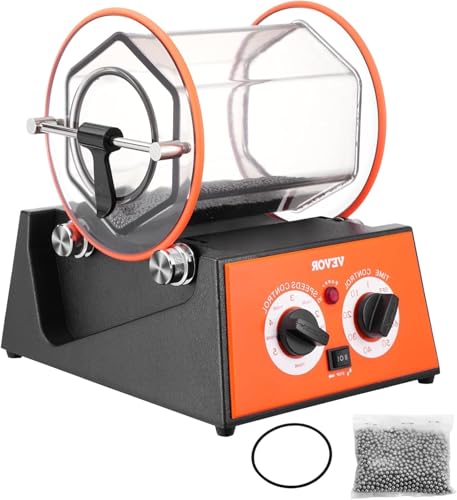
- 5 kg capacity for batch finishing
- Five speeds, bidirectional rotation, and 10–60 minute timer
- Leak-proof polycarbonate body with stable rubber pads
Best For: Batch polishing, chamfering, and fine grinding
Complete Kit Pick

- 500–10,000 RPM speed range
- Six cotton wheels, two fiber wheels, and three compounds included
- Pre-drilled, non-slip base with mounting screws
Best For: Beginners and small studios wanting a ready-to-use kit
Powerful Display Pick

- 1200W motor with approximately 500–10,000 RPM control
- Speed display, dust collector, work light, and eye shield
- Includes multiple wheels, compounds, tools, and spare brushes
Best For: Higher-power polishing with visible speed monitoring
Best Rotary Tumbler

- 3 kg polycarbonate barrel
- Five speeds and bidirectional rotation
- 10–60 minute adjustable timer
Best For: Batch polishing jewelry, gemstones, coins, and metal parts
Best High-Speed Bench Buffer
TM-2 Adjustable Jewelry Polisher

- 0–10,000 RPM adjustable speed
- 350W low-noise motor
- Includes wheels, shaft, chuck, and rod
Best For: Hands-on polishing, engraving, drilling, and rust removal
Best Complete Polishing Kit

- 0–10,000 RPM speed control
- Multiple wheels, paste, and safety glasses
- Stable cast-iron base with rubber feet
Best For: Home studios and compact benches handling varied finishing tasks
Hydrogen Flame Precision Pick
Digital Acrylic Flame Polisher

- Touch-screen flow and current display
- 96L/H continuous flame output
- Designed for jewelry repair and acrylic work
Best For: Precision flame polishing, small welding, and jewelry repair
Variable-Speed Bench Buffer Pick
Jewelry Polisher PRO Bench Buffer
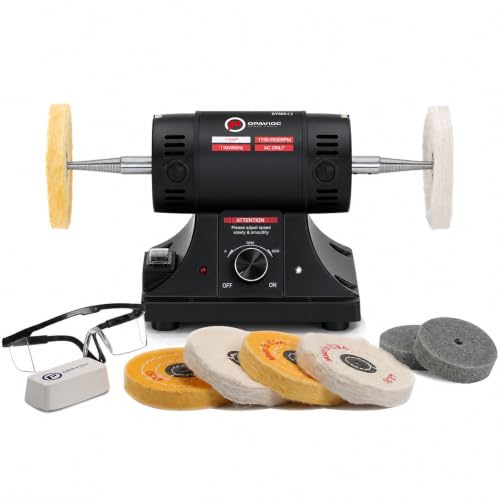
- 1,750–8,500 RPM adjustable speed
- 0.6 HP motor for buffing and grinding
- Includes cotton buffs, fiber wheels, and compound
Best For: Versatile bench polishing with a ready-to-use accessory kit
Dust-Control Workshop Pick
Jewelry Polisher with Dust Collector Hood

- 1,750–8,500 RPM variable speed
- Dual fans and replaceable filters
- Built-in light and included polishing accessories
Best For: Cleaner, well-lit jewelry and metal polishing stations
Compact Variable-Speed Pick – Adjustable Jewelry Bench Polisher
For shoppers comparing digital jewelry polishers, this compact bench machine offers adjustable speed control for work ranging from jewelry and chains to gems and machine components. Its 320W motor runs from 1,750 to 8,500 RPM, while the included wheels and compound provide a practical starting setup.
Best For: Hobbyists and jewelry workers who need a portable, variable-speed polishing and buffing machine.
Pros:
- Variable speed from 1,750 to 8,500 RPM supports different polishing tasks.
- Includes six 4-inch cotton wheels, two fiber wheels, compound, and safety glasses.
- Compact aluminum design measures 13 by 5 by 5.5 inches and weighs about 7.2 pounds.
Cons:
- Its 320W motor is less powerful than the higher-wattage options in this roundup.
- The supplied notes do not mention an integrated dust collector or speed display.
This is a well-rounded choice when workspace and portability matter more than maximum motor power. The broad speed range and included accessories make it flexible for small polishing projects.
High-Capacity Tumbler Pick – 5 kg Rotary Jewelry Tumbler
Among digital jewelry polishers, this rotary tumbler is designed for batch finishing rather than handheld buffing. Its 5 kg capacity, five speeds, bidirectional rotation, and 10-to-60-minute timer give users control over polishing, chamfering, trimming, and fine grinding.
Best For: Users who want to process multiple jewelry or metal pieces in a sealed rotary tumbler.
Pros:
- 5 kg capacity supports batch polishing work.
- Offers five speeds, bidirectional rotation, and a 10-to-60-minute timer.
- Polycarbonate construction, leak-proof design, buckle closure, and nonslip rubber pads support contained, stable operation.
Cons:
- Its 130 RPM rotary action is intended for tumbler-style finishing, not direct buffing.
- The supplied notes do not list polishing media as included.
This VEVOR model makes sense for repeatable batch work and surface finishing across jewelry and several metals. Choose it over a bench buffer if containment and capacity are more important than direct wheel polishing.
Complete Kit Pick – 400W Bench Jewelry Polisher
This 400W option stands out among digital jewelry polishers for its broad 500-to-10,000-RPM range and ready-to-use accessory package. A non-slip base, mounting screws, six cotton wheels, fiber wheels, three compounds, and safety glasses make it suitable for home workspaces and small studios.
Best For: Beginners and small-shop users who want a versatile bench polisher with included mounting hardware and accessories.
Pros:
- Adjustable speed from 500 to 10,000 RPM suits gentle buffing through high-shine polishing.
- Includes six cotton wheels, two fiber wheels, three polishing compounds, goggles, screws, and spare carbon brushes.
- Pre-drilled mounting design and non-slip base support stable bench use.
Cons:
- Bench mounting may be less convenient for users who need a frequently movable setup.
- The supplied notes do not specify a built-in dust collection system.
With its generous speed range and extensive kit, this is a strong all-purpose bench choice. The mounting features are especially useful when consistent stability matters during detailed or heavier polishing.
Powerful Display Pick – 1200W Variable-Speed Polisher
For demanding users comparing digital jewelry polishers, this model combines a 1200W motor with a speed display and approximately 500-to-10,000-RPM adjustment. Its dual exhaust fan blower, dust collector, work light, eye shield, and large accessory set are designed to make extended polishing more manageable.
Best For: DIY users and small workshops seeking high power, visible speed control, and added workstation features.
Pros:
- 1200W motor and variable speed up to approximately 10,000 RPM provide substantial polishing capacity.
- Speed display helps users monitor adjustments during work.
- Includes dust collector, work light, eye shield, cotton and nylon wheels, compounds, tools, and spare brushes.
Cons:
- At about 23.3 pounds, it is heavier than the compact bench options.
- The notes indicate that sound increases as motor power increases.
- Its 17.72-by-13-by-8.67-inch footprint may require more bench space.
This is the feature-rich choice for users who prioritize motor power and workspace convenience. Its heavier, larger format is a tradeoff for the display, dust collection, lighting, and included accessories.
Best Rotary Tumbler – VEVOR 3 kg Jewelry Tumbler
For shoppers comparing digital jewelry polishers, this VEVOR rotary tumbler is a practical choice for batch finishing. Its 3 kg polycarbonate barrel, bidirectional rotation, five speeds, and adjustable timer support polishing, grinding, chamfering, and deburring jewelry, gemstones, coins, and metal parts.
Best For: Batch polishing and surface finishing of jewelry, gemstones, coins, and small metal workpieces.
Pros:
- 3 kg capacity with a leak-proof polycarbonate barrel.
- Five speeds, bidirectional rotation, and a 10–60 minute timer allow process adjustments.
- Wear-resistant rubber feet help keep the 45W tumbler stable and reduce vibration.
- Designed for polishing, chamfering, trimming, rough finishing, and fine grinding.
Cons:
- Its 150 RPM rotary-tumbler design is less suited to precision handwork than a bench buffer.
- The listed timer starts at 10 minutes, limiting very short cycles.
This model makes the most sense when you want repeatable tumbling rather than direct control over an individual piece. The sealed barrel and adjustable operation add flexibility, while the compact 8.5-pound design keeps it suitable for smaller work areas.
Best High-Speed Bench Buffer – TM-2 Adjustable Jewelry Polisher
Among digital jewelry polishers, the TM-2 is aimed at hands-on bench work rather than tumbling. Its 350W motor adjusts from 0 to 10,000 RPM, while the included wheels, flexible shaft, chuck, and polishing rod support jewelry making, buffing, engraving, drilling, and rust removal.
Best For: Users who need adjustable-speed polishing and versatile accessory support for jewelry, metal, wood, plastic, and craft projects.
Pros:
- Wide 0–10,000 RPM range accommodates delicate polishing and faster buffing.
- Includes three polishing wheels, a flexible shaft, drill chuck, and polishing rod.
- Compact 2.6 kg body fits easily on a workbench and can be lifted with one hand.
- Supports polishing, surface finishing, engraving, drilling, and rust removal.
Cons:
- The left and right spindles must be identified correctly before installing wheels.
- The flexible shaft can only be installed on the left side.
The TM-2 is a flexible option for makers who want one compact machine for multiple finishing tasks. Its broad speed range is useful for varying materials, but careful spindle and accessory installation is essential.
Best Complete Polishing Kit – TM-2 Digital Bench Buffer
For buyers seeking digital jewelry polishers with a broad accessory package, this TM-2 bench buffer combines a 350W motor with 0–10,000 RPM speed control. It includes multiple wheels, polishing paste, a flexible shaft, and safety glasses for work ranging from jewelry polishing to grinding, cleaning, and rust removal.
Best For: Small studios and home workbenches needing a compact, multi-material polishing and finishing setup.
Pros:
- Adjustable 0–10,000 RPM speed supports gentle and high-speed polishing.
- Complete kit includes cloth, fiber, grinding, and wool wheels plus polishing paste.
- Cast-iron base, rubber feet, and fixing holes help reduce movement during use.
- Includes safety glasses and supports polishing, drilling, engraving, grinding, brushing, and cleaning.
Cons:
- The flexible shaft can only be fitted to the left spindle.
- Users must distinguish the left and right spindles to avoid installation problems.
- At 9 pounds, it is heavier than the other listed TM-2 model.
This version stands out for its included accessories and stable metal base. It is a strong fit when you want to begin with several polishing and grinding options, provided you follow the spindle setup guidance.
Hydrogen Flame Precision Pick – Digital Acrylic Flame Polisher
For buyers comparing digital jewelry polishers, this touch-screen flame polisher is designed for precision flame work rather than conventional wheel buffing. Its digital display shows flow and current values, while the 96L/H electrolysis system produces a continuously adjustable flame for jewelry repair and other small-scale applications.
Best For: Jewelry repair, small metal welding, acrylic polishing and bending, and glass work.
Pros:
- Touch-screen controls and real-time digital flow and current display.
- 96L/H upgraded electrolysis cell supports a stable, continuous flame.
- Includes a flashback arrestor and precision flame-size valve.
- Uses water to generate hydrogen and oxygen, with water vapor as the combustion product.
Cons:
- Electrolyte powder is not included and must be purchased separately.
- As a flame polisher, it is not a substitute for a conventional buffing machine.
- Requires appropriate gas filtering and careful operation.
This is the specialized choice for users who need controlled flame processing or soldering-style jewelry repair. Confirm that you are prepared to source the electrolyte and follow the operating guidance before buying.
Variable-Speed Bench Buffer Pick – Jewelry Polisher PRO Bench Buffer
Among digital jewelry polishers, this variable-speed bench buffer is a practical fit for users who want adjustable control over buffing, grinding, and finishing. Its 0.6 HP motor runs from 1,750 to 8,500 RPM, and the kit includes multiple wheels, safety glasses, and polishing compound to help get started.
Best For: Jewelry makers, hobbyists, and workshops handling jewelry, chains, metal components, or other small parts.
Pros:
- Variable speed from 1,750 to 8,500 RPM supports different polishing stages.
- 0.6 HP motor provides higher torque in a compact bench setup.
- Includes six 4-inch cotton buffs, two abrasive fiber wheels, safety glasses, and compound.
- Can also be used for broader buffing and grinding tasks.
Cons:
- It is a corded 110V machine, so placement depends on access to a suitable outlet.
- The supplied notes do not indicate an integrated dust-collection system.
- Its 5.8-pound, compact design may be less substantial than a larger shop buffer.
Choose this model when adjustable speed and a useful starter accessory set matter more than built-in dust management. It offers a versatile bench-top approach to jewelry polishing and general buffing.
Dust-Control Workshop Pick – Jewelry Polisher with Dust Collector Hood
This bench-top option stands out among digital jewelry polishers for its enclosed dust-control features. The 1/2 HP motor offers adjustable speeds from 1,750 to 8,500 RPM, while dual brushless fans, replaceable filters, and built-in lighting are intended to make jewelry and metal polishing cleaner and easier to see.
Best For: Jewelry and silver polishing where dust capture, workspace lighting, and compact equipment are priorities.
Pros:
- Adjustable 1,750–8,500 RPM speed range supports varied polishing tasks.
- Dual brushless fans and replaceable filters help capture particles and gold dust.
- Built-in working light improves visibility during polishing.
- Includes two 4-inch buffing pads, two fiber wheels, and polishing compound.
Cons:
- Filter effectiveness depends on maintaining and replacing the filters.
- It is a corded 110V machine with a maximum listed power of 320 watts.
- The compact design may not suit users seeking a larger industrial bench polisher.
This model is a strong fit for a cleaner, better-lit polishing station without moving to a larger machine. Its dust-management hardware adds practical value for jewelry and metal finishing, especially in a compact workspace.
How We Picked These Digital Jewelry Polishers
We selected these 10 machines to cover the main polishing methods used by jewelry makers, repair shops, hobbyists, and small production spaces. The lineup includes variable-speed bench polishers, compact rotary tumblers, machines with digital displays or timers, and options designed for more specialized finishing tasks.
Our comparison focuses on practical specifications rather than appearance alone: polishing method, motor power, speed adjustment, drum capacity, timer controls, included wheels or accessories, footprint, and suitability for repeated work. Because product configurations can vary, confirm the current listing details before purchasing.
Quick Comparison
| Machine type | Best suited to | Features to prioritize |
|---|---|---|
| Variable-speed bench polisher | Buffing, finishing, and controlled surface work | Speed range, motor power, wheel compatibility, stability |
| Rotary tumbler | Batch finishing and edge smoothing | Capacity, timer, speed settings, drum construction |
| Digital-display polisher | Repeatable bench workflows | Clear controls, speed readout, adjustment precision |
| Specialized flame polisher | Acrylic and compatible specialty materials | Material compatibility, safety features, ventilation |
Key Buying Factors for Digital Jewelry Polishers
Polishing Method and Workload
A bench buffer gives direct control over the workpiece and is generally better for targeted polishing, compound application, and final finishing. A tumbler handles multiple pieces at once and can reduce hands-on labor, but it requires appropriate media and may not provide the same control over individual surfaces.
Speed and Control
Variable-speed adjustment is useful when switching between delicate materials, aggressive cutting, and high-gloss finishing. Digital displays can make settings easier to repeat, while a timer is especially valuable for unattended tumbling cycles.
Capacity, Accessories, and Workspace
Choose drum capacity based on typical batch size, not maximum advertised capacity alone. For bench machines, check the footprint, wheel size, included cotton buffs, abrasive accessories, and whether a dust hood or collector is included. These extras can affect the machine’s real value and setup requirements.
Safety and Maintenance
Look for stable construction, accessible controls, suitable guards, and a workspace with adequate ventilation. Keep polishing dust controlled, use eye protection, and follow the manufacturer’s instructions for compatible compounds, media, and materials.
Who Should Buy Which Digital Jewelry Polishers?
- Choose a variable-speed bench polisher if you need hands-on control for jewelry repair, shaping, or final gloss work.
- Choose a rotary tumbler if you finish batches of small parts and prefer timed, repeatable processing with less manual buffing.
- Choose a digital-display model if consistent speed settings matter across repeated projects or multiple operators.
- Choose a model with dust collection if you work frequently with polishing compounds and want a cleaner bench area.
- Choose a specialized flame polisher only when your materials and workflow specifically require that process, and verify safety and ventilation requirements first.