Marathon training and race-day effort can leave your legs feeling heavy, tight, and fatigued. Compression boots can support post-run recovery by applying sequential air pressure across the feet and legs.
We compared 10 recovery systems across fit, portability, pressure control, coverage, and everyday usability to help you choose the right pair for your training routine.
Best 10 Compression Boots for Marathon Recovery Picks for 2026
Trusted Sequential Recovery

- Seven compression levels with five overlapping zones
- ZoneBoost and Bluetooth app customization
- Standard fit: 31–35-inch inseam; corded power
Best For: Runners wanting customizable, established compression therapy
Travel-Ready Wireless Recovery

- Wireless, foldable design with a carry backpack
- Four pressure levels and four treatment intervals
- Up to three hours of battery life
Best For: Runners prioritizing portability and cordless sessions
Highly Adjustable Athlete Recovery
- Five-zone control for targeted or full-leg sessions
- Eleven pressure levels and ten time settings
- Cordless, portable design with two-year warranty
Best For: Athletes wanting extensive recovery customization
Premium Hose-Free Recovery

- Wireless design with up to four hours of battery life
- Seven levels with synchronized five-zone compression
- Bluetooth app customization and ZoneBoost
Best For: Runners seeking premium portable recovery technology
Most Customizable
MUSUGY Sequential Leg Compression Boots

- Five sequential chambers cover the full leg
- Nine pressure levels and six modes
- Adaptive sensor helps balance air output
Best For: Runners seeking extensive session customization
Best Warranty
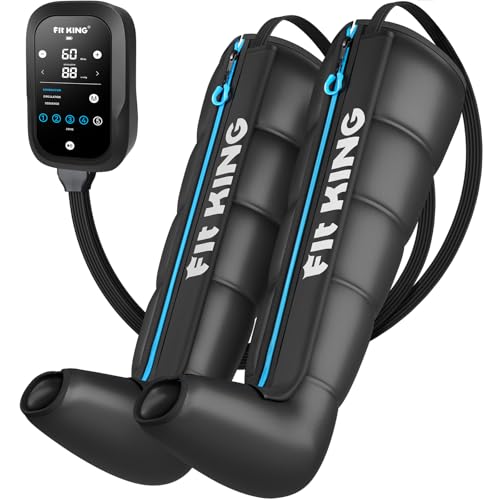
FIT KING Full-Leg Recovery Boots

- Four independent full-leg air channels
- Eight pressure levels and three modes
- Two-year worry-free warranty
Best For: Athletes wanting simple controls and longer coverage
Best Fit Guidance
RENUPRO Dynamic Air Compression Boots
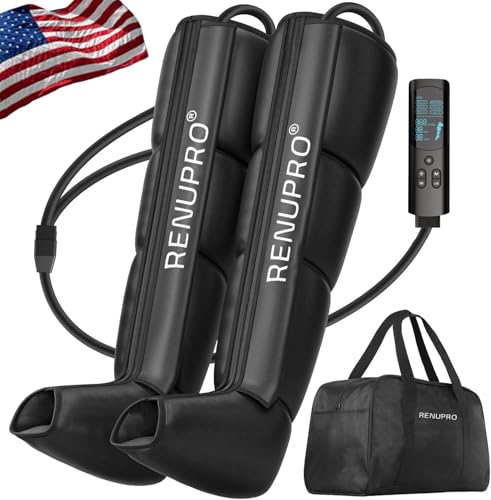
- Full-leg coverage with overlapping chambers
- Six modes and nine strength levels
- 24-month warranty and stated fit range
Best For: Runners who want detailed sizing and customization
Adjustable Professional Recovery
QUINEAR Sequential Compression Boots

- Four chambers cover the foot, calf, and thigh.
- Eight intensities, three modes, and three timer settings.
- Pressure sensor and carry bag support convenient use.
Best For: Runners seeking highly adjustable corded recovery sessions
Full-Leg Comfort and Convenience
Portable 360° Compression Boots

- Seven air bags wrap the foot, ankle, calves, and thighs.
- Six modes and three pressure levels support targeted sessions.
- Wide zippers, sensors, LCD remote, and carry bag add convenience.
Best For: Users wanting broad coverage and simple portable controls
Wireless Athlete-Focused Recovery
Anaconda Wireless Compression Boots

- Four zones cover the foot, calf, knee, and thigh.
- Rechargeable battery provides up to four hours of use.
- Three modes include full-leg and targeted-zone control.
Best For: Athletes needing cordless recovery for travel and training
Trusted Sequential Recovery – Hyperice Normatec 3 Legs
For runners seeking compression boots for marathon recovery, the Hyperice Normatec 3 offers a structured, dynamic air-compression massage. Its seven intensity levels, five overlapping zones, and ZoneBoost feature let you tailor sessions for post-race leg fatigue, soreness, or warm-up.
Best For: Marathon runners who want a well-established, app-connected compression system and fit the standard 31–35-inch inseam range.
Pros:
- Seven compression levels provide useful intensity control.
- Five overlapping zones and ZoneBoost support targeted treatment.
- Bluetooth connectivity enables added customization through the Hyperice App.
Cons:
- The Amazon listing offers only the Standard size.
- It requires corded electric power rather than cordless operation.
- The maximum thigh circumference is 30 inches.
The Normatec 3 is a strong choice if customization and an established recovery platform matter more than portability. Check the inseam and thigh measurements carefully before ordering.
Travel-Ready Wireless Recovery – Therabody JetBoots Prime
The Therabody JetBoots Prime are a practical option for compression boots for marathon recovery when portability is a priority. These wireless boots fold compactly, include built-in controls, and provide four pressure levels and four treatment intervals without hoses or power cords during use.
Best For: Marathoners who want cordless recovery sessions at races, the gym, or while traveling and fit the regular leg-length range.
Pros:
- Fully wireless design folds into a backpack-friendly shape.
- Built-in controls simplify pressure and session adjustments.
- Up to three hours of battery life, with use possible while charging.
- Non-porous materials offer a flat, easy-to-clean interior.
Cons:
- Only four pressure levels are available.
- The regular fit must be checked carefully before ordering; the listing cites a 30–34-inch inseam and also references 32–37 inches.
- They are not water resistant.
JetBoots Prime stands out for runners who need a simple, hose-free setup after a marathon. Confirm the correct leg measurements because the supplied sizing information is not completely consistent.
Highly Adjustable Athlete Recovery – FIT KING Pro FT-115A
For athletes comparing compression boots for marathon recovery, the FIT KING Pro FT-115A emphasizes extensive control. Its cordless design combines five-zone compression, 11 pressure levels, three massage modes, and adjustable session times for targeted or full-leg recovery.
Best For: Runners who want broad customization, zone-specific treatment, and a portable system for home, gym, office, or travel.
Pros:
- Five-zone control can target the foot, calves, thigh, or full leg.
- Eleven pressure levels and ten time settings allow detailed adjustment.
- Cordless battery operation provides three to four hours of use.
- Includes a carry bag and a two-year warranty.
Cons:
- The many settings may take longer to learn than simpler systems.
- Its 4.5-kilogram weight may be less convenient for frequent travel.
- It is not water resistant.
The FT-115A is appealing when fine-grained control matters more than the lightest possible kit. Its zone controls and long feature list suit runners who like to customize each recovery session.
Premium Hose-Free Recovery – Hyperice Normatec Elite
The Hyperice Normatec Elite brings the brand’s sequential compression approach to runners looking for compression boots for marathon recovery without a separate hose-connected control unit. It offers seven intensity levels, up to four hours of battery life, synchronized leg treatments, and app-based customization.
Best For: Marathon runners who want a premium wireless system with extensive intensity control and a standard 31–35-inch inseam fit.
Pros:
- Fully wireless design supports recovery away from outlets.
- Seven compression levels accommodate different treatment preferences.
- HyperSync keeps both legs synchronized during sessions.
- Bluetooth app access adds control over pressure, zones, and session length.
Cons:
- Higher intensity settings can reduce battery life.
- The standard size may not suit runners outside the 31–35-inch inseam range.
- It is not water resistant.
Normatec Elite is the most portable Hyperice option in this group while retaining detailed control. It makes sense for runners who value wireless convenience, synchronized compression, and app personalization.
Most Customizable – MUSUGY Sequential Leg Compression Boots
For shoppers comparing compression boots for marathon recovery, the MUSUGY system stands out for its broad adjustment range. It covers the full leg with five sequential air chambers and offers multiple intensity, mode, and timer choices for tailoring post-run sessions.
Best For: Runners and athletes who want highly adjustable full-leg recovery sessions.
Pros:
- Five chambers cover the foot, calves, knees, and thighs in a distal-to-proximal sequence.
- Nine pressure levels, six modes, and 15-, 20-, or 25-minute timers provide extensive customization.
- A pressure sensor automatically balances air output to help maintain an even fit.
- Reinforced nylon and double-stitched seams support regular use, with a 12-month warranty included.
Cons:
- The stated fit is limited to a 36-inch-or-longer inseam, thighs up to 31 inches, and calves up to 22 inches.
- The extensive settings may feel more involved than a simpler recovery boot.
With its five-zone coverage and fine-grained controls, this is a flexible option for runners who want to adjust recovery sessions around different training demands. Check the measurements carefully before buying.
Best Warranty – FIT KING Full-Leg Recovery Boots
The FIT KING Air Compression Recovery System is a practical choice for marathon recovery if you want full-leg coverage with straightforward digital controls. Its four independent air channels address the feet, calves, knees, and thighs, while the large pump is designed for faster, quieter inflation and deflation.
Best For: Athletes who prioritize simple operation, faster inflation, and extended warranty coverage.
Pros:
- Four independent chambers provide full-leg compression from the feet through the thighs.
- Three modes, eight pressure intensities, and three timer choices allow session adjustments.
- A sensor system adjusts inflation volume for different leg sizes.
- Includes a two-year worry-free warranty and customer support.
Cons:
- It offers fewer modes and pressure levels than some competing products in this roundup.
- The large size may not suit users who need a smaller fit.
- It is corded electric and not water resistant.
The FIT KING balances useful customization with a relatively uncomplicated control setup. Its two-year warranty is a notable advantage for runners planning frequent home use, provided the large fit is appropriate.
Best Fit Guidance – RENUPRO Dynamic Air Compression Boots
RENUPRO Dynamic Air Compression Boots are designed for runners looking for full-leg compression boots for marathon recovery with clearly stated sizing limits. The boots use overlapping chambers and sensor-controlled sequential pressure, with six modes, nine strength levels, and timed sessions for post-race or training-day use.
Best For: Runners who want full-leg coverage, detailed size guidance, and a long warranty.
Pros:
- Dynamic compression covers the feet, calves, knees, and thighs in one session.
- Six modes, nine strength levels, and 15-, 20-, or 25-minute timers support personalized use.
- Smart sensors and overlapping chambers are designed for sequential, controlled pressure.
- Includes a 24-month warranty from a USA-based, family-owned brand.
Cons:
- The standard fit is specified for a 29- to 34-inch inseam and thighs up to 30 inches.
- It is corded electric and not water resistant.
- The broad feature set may be more than users seeking a basic massage device need.
RENUPRO offers a strong feature mix for recovery-focused runners, especially those who fit its published measurements. The 24-month warranty adds reassurance, while the digital controls make it easy to vary pressure and session length.
Adjustable Professional Recovery – QUINEAR Sequential Compression Boots
For runners comparing compression boots for marathon recovery, the QUINEAR system offers a corded setup with four air chambers covering the foot, calf, and thigh. Its pressure range, massage modes, and adjustable session timer make it a practical choice for tailoring post-run leg compression.
Best For: Athletes who want customizable, full-leg recovery sessions at home or in the gym.
Pros:
- Four air chambers provide sequential compression across the foot, calf, and thigh.
- Eight intensity levels, three modes, and 20-, 25-, or 30-minute timers offer flexible sessions.
- Built-in pressure sensing helps adapt inflation to different leg sizes.
- Includes a carry bag and a stated 24-month worry-free commitment.
Cons:
- The corded-electric design requires access to an outlet.
- It is not water resistant.
- Its professional feature set may be more than casual users need.
With broad adjustability and a dedicated controller, this QUINEAR model is a strong fit for marathoners who prefer to fine-tune pressure and timing rather than use a minimal preset system.
Full-Leg Comfort and Convenience – Portable 360° Compression Boots
This portable full-leg massager is a straightforward option for people seeking compression boots for marathon recovery, with seven air bags wrapping key areas from the foot through the thigh. Six preset modes, three pressure levels, and a 20-minute shutoff make it easy to use after a long run.
Best For: Runners and active users who want broad leg coverage, simple controls, and portable storage.
Pros:
- Seven air bags provide 360-degree compression across the foot, ankle, calves, and thighs.
- Six massage modes include full-leg and targeted options for the foot, calf, or thigh.
- Three pressure levels and smart leg-fit sensors support personalized use.
- Wide zippers, an adjustable belt, LCD remote, and carry bag improve convenience.
Cons:
- The supplied specifications do not identify a battery-powered or wireless design.
- The 20-minute auto-shutoff offers less timer flexibility than systems with multiple timer settings.
- The product dimensions listed in the specifications appear incomplete.
This model emphasizes coverage and ease of use over advanced customization. It is a sensible pick for post-marathon relaxation, especially if targeted foot, calf, or thigh sessions are useful to you.
Wireless Athlete-Focused Recovery – Anaconda Wireless Compression Boots
For marathon recovery away from an outlet, the Anaconda wireless system combines four-zone sequential compression with a rechargeable battery. Its 200 mmHg stated maximum pressure, three modes, and zone control give runners a portable way to focus on the foot, calf, knee, or thigh.
Best For: Athletes who prioritize cordless recovery at home, in the gym, or while traveling.
Pros:
- Wireless design uses a rechargeable battery rated for up to four hours.
- Four zones target the foot, calf, knee, and thigh.
- Full-leg, massage, and targeted-zone modes provide different recovery approaches.
- Includes a travel bag and offers a simple controller without requiring an app.
Cons:
- The supplied details do not list multiple intensity levels.
- Charging time is listed as four hours, so planning may be needed between uses.
- The medium size may not suit every leg.
The Anaconda stands out for mobility: its battery and travel-oriented design make it especially practical for marathon weekends, gym sessions, and recovery when a power outlet is inconvenient.
How We Picked the Best Compression Boots for Marathon Recovery
We focused on features that matter after long runs: full-leg coverage, sequential compression, adjustable intensity, comfortable sizing, simple controls, and reliable portability. Wireless designs can be convenient for recovery away from an outlet, while plug-in systems may offer a practical value for home use. We also considered whether each system appears suited to runners who want occasional relief or frequent recovery sessions throughout a training cycle.
Compression boots are not a substitute for medical care. If you have circulation problems, a history of blood clots, unexplained leg swelling, or another relevant health condition, ask a medical professional before using them.
Quick Comparison
| Best For | Look For |
|---|---|
| Premium recovery | Advanced controls, dependable fit, and refined wireless operation |
| Travel and convenience | Rechargeable battery, cordless controls, and compact storage |
| Frequent marathon training | Durable construction, consistent sequential pressure, and easy cleaning |
| Budget-conscious buyers | Multiple pressure levels and zones without unnecessary extras |
| Different leg sizes | Clearly stated inseam, calf, and thigh measurements |
Key Buying Factors for Compression Boots for Marathon Recovery
Coverage and Fit
Full-leg boots typically cover the foot, lower leg, and thigh, making them a versatile choice after long-distance training. Check the manufacturer’s measurements rather than relying only on labels such as Standard, Regular, or Large. A poor fit can create uncomfortable pressure or leave areas untreated.
Pressure Settings and Zones
Look for several intensity levels and sequential zones so you can begin gently and adjust as needed. More settings do not automatically mean better recovery, but they make it easier to find a comfortable routine.
Wireless Operation and Battery Life
Cordless boots are useful at races, in hotel rooms, or while traveling. Confirm how the controllers charge, how long they run, and whether both legs can be operated together. Wired systems may be preferable if you mainly recover at home and want to reduce cost.
Controls, Noise, and Maintenance
Simple controls are valuable when you are tired after a run. Also consider pump noise, boot weight, hose management, storage, and whether the materials can be wiped clean between sessions.
Who Should Buy Which Compression Boots for Marathon Recovery?
Choose a premium wireless system if you want polished controls, portability, and frequent use during marathon training. A full-featured wired set may be the better value for runners who recover at home and want broad leg coverage. Budget-oriented models can work well for occasional post-run sessions, provided the sizing is accurate and the pressure feels comfortable. Athletes who travel often should prioritize cordless operation and battery performance, while runners with larger or smaller legs should make fit the deciding factor before comparing extra modes.