Shopping for a red and near infrared light therapy panel can feel overwhelming fast. Power, wavelength mix, LED count, and stand design all affect how well a panel fits your routine.
This roundup focuses on practical choices for home use, with picks that balance coverage, ease of use, and everyday value.
Best 10 Red and Near Infrared Light Therapy Panel Picks for 2026
Pro-Size Home Panel
Hooga PRO300 Red & Near-Infrared Light Panel

- 60 dual-chip LEDs with 660nm and 850nm output
- Built-in timer and independent light controls
- Includes vertical stand; can connect to other PRO Series panels
Best For: Home users wanting a larger, stand-ready panel for daily routines
Curved Portable Lamp
Viconor Red Light Therapy Lamp with Stand

- 120 LEDs with 660nm red and 850nm infrared light
- Curved body helps focus light on the target area
- Includes stand, hook, and 1.8m power cord
Best For: People wanting a compact, adjustable lamp for face and body sessions
Compact Starter Panel
Hooga HG300 Red Light Therapy Panel

- 60 LEDs with 660nm red and 850nm near-infrared light
- Over 73 mW/cm² irradiance at 6 inches
- Includes adjustable stand and protective eyewear
Best For: Shoppers wanting a compact, tabletop-friendly starter panel
Multi-Wavelength Value Panel
BO-300 5-Wavelength Red Light Device

- Five wavelengths including 630nm, 660nm, 810nm, 830nm, and 850nm
- 60 dual-chip LEDs deliver 131mW/cm² at 6 inches
- Remote control, 3 modes, and adjustable timer
Best For: Buyers wanting multi-wavelength flexibility and remote control at home
Large Full-Body Panel

- 11 x 14.5-inch panel with 180 LEDs
- 45–60 inch adjustable stand with 360° rotation
- 5 brightness levels, timers, and full accessory kit
Best For: people wanting broad home coverage and simple positioning
Wall-Mount 45W Panel
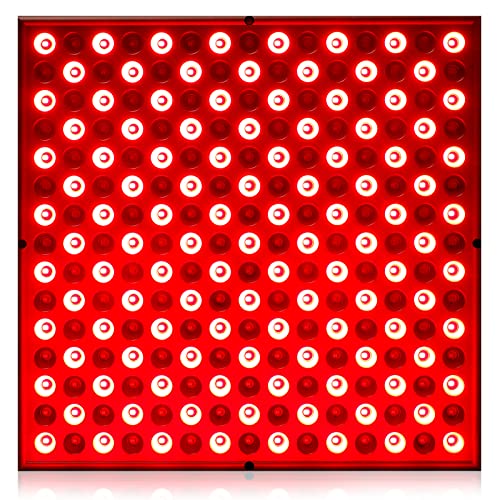
- 45W panel with 660nm and 850nm light
- Can be hung or used independently
- 225 light sources in a compact build
Best For: home users who want a simple mounted panel
Compact Travel Panel

- 10.3 x 6.7 x 1.4-inch compact body
- 55W dual-chip 660nm/850nm output
- 4 modes, timer, app control, and adjustable stand
Best For: travel-friendly targeted use with easy controls
Compact Dual-Chip Panel

- 120 dual-chip LEDs with 660nm and 850nm light
- Three modes plus a 1-30 minute timer
- Lightweight design can stand, lie flat, or hang
Best For: Home users who want flexible placement and simple daily sessions
Desktop Power Pick

- 40 LEDs with 660nm and 850nm output
- Built-in stand, timer, and cooling fan
- Compact size suits desk or tabletop use
Best For: People who want a small, easy-to-use starter panel for tabletop sessions
High-Power Full-Body Option
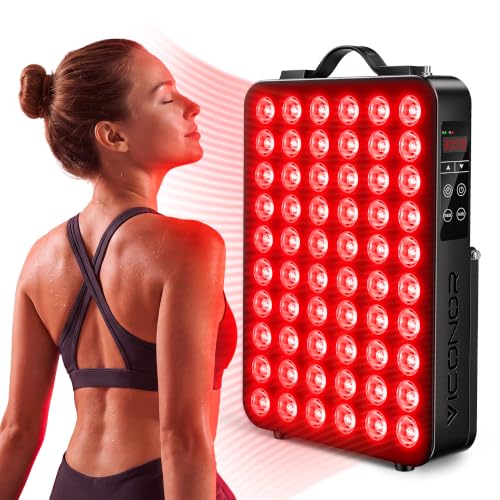
- Dual-chip LEDs provide 660nm and 850nm light
- 300W power with 140 mW/cm² at 6 inches
- Timer, handle, hanging kit, and eye protection included
Best For: Users who want a stronger panel with flexible mounting and full-body potential
Pro-Size Home Panel – Hooga PRO300 Red & Near-Infrared Light Panel
If you’re comparing a red and near infrared light therapy panel for regular home use, the Hooga PRO300 is built for users who want broader coverage and a more permanent setup. Its 60 dual-chip LEDs combine 660nm red and 850nm near-infrared light, with independent controls, a built-in timer, and a stand included for easier daily sessions.
Best For: Home users who want a larger, stand-ready panel for consistent wellness routines and wider coverage.
Pros:
- 60 dual-chip LEDs deliver both 660nm red and 850nm near-infrared light.
- Built-in digital timer plus independent red and near-infrared controls.
- Includes a vertical stand and can connect with other PRO Series panels.
- Flicker-free design with internal cooling fans and durable housing.
Cons:
- At 300W and 61.2 inches long, it takes up more space than compact panels.
- Tabletop or installed use may be less convenient for very small rooms.
Overall, the PRO300 makes sense if you want a practical red and near infrared light therapy panel with more full-body-friendly dimensions and room to expand later. It leans toward steady home wellness use rather than ultra-portable convenience.
Curved Portable Lamp – Viconor Red Light Therapy Lamp with Stand
The Viconor unit is a compact red and near infrared light therapy panel style lamp designed for face and body use at home. It uses 120 LEDs with 660nm visible red light plus 850nm infrared light, and the curved surface is meant to focus light more directly on the target area.
Best For: Users who want a small, flexible lamp for face-focused sessions and portable at-home use.
Pros:
- 120 LEDs combine 660nm red light and 850nm infrared light.
- Curved design is intended to concentrate the light source.
- Can be hung or placed independently for flexible positioning.
- Includes a stand, hook, and 1.8m power cord for easy setup.
Cons:
- 30W output is lower than larger panel-style options.
- Best suited to targeted use rather than broad full-body coverage.
This is a practical pick if you want an easy-to-move light that can fit a desk, bed, or sofa setup. It focuses on convenience and adjustability more than high-output panel size.
Compact Starter Panel – Hooga HG300 Red Light Therapy Panel
If you want a red and near infrared light therapy panel for targeted sessions without committing to a large system, the Hooga HG300 is a compact option. It pairs 60 LEDs with 660nm red and 850nm near-infrared light, and the included tabletop stand makes it straightforward to use on a desk, counter, or nightstand.
Best For: Buyers who want a compact starter panel with strong output and easy tabletop placement.
Pros:
- 60 LEDs provide 660nm red light and 850nm near-infrared light.
- Over 73 mW/cm² irradiance at 6 inches for a compact panel.
- Adjustable tabletop stand supports easy desktop or nightstand use.
- Includes protective eyewear, power cord, and user manual.
Cons:
- Designed for smaller targeted areas, not broad full-body coverage.
- Compact footprint may be too limited for users wanting a larger panel.
The HG300 is a solid entry point if you want a smaller, well-equipped panel for everyday routines. It balances practical size with the kind of setup features that make home use simple.
Multi-Wavelength Value Panel – BO-300 5-Wavelength Red Light Device
For shoppers comparing a red and near infrared light therapy panel with more wavelength options, the BO-300 stands out for its 5-wavelength design. It combines 630nm, 660nm, 810nm, 830nm, and 850nm wavelengths with 60 dual-chip LEDs, remote control, and an adjustable stand for flexible home use.
Best For: Users who want a feature-rich panel with multiple wavelengths and easy remote-based control.
Pros:
- Uses 5 wavelengths: 630nm, 660nm, 810nm, 830nm, and 850nm.
- 60 dual-chip LEDs provide 131mW/cm² irradiance at 6 inches.
- Includes remote control, eye protection, adjustable stand, and cooling fan.
- Offers 3 modes and a 1-30 minute timer for simple customization.
Cons:
- Requires a 23A 12V battery for the remote, and it is not included.
- Coverage is listed as 14 x 12 inches at 6 inches, so it is still a targeted panel.
This model is appealing if you want broader wavelength coverage without giving up an at-home, plug-in setup. It is especially practical for users who like to fine-tune sessions with a remote and timer.
Large Full-Body Panel – 11×14.5-Inch Adjustable Stand
If you want a red and near infrared light therapy panel that can cover more than just your face, this larger-format option is built for broader home use. Its 11 x 14.5-inch panel, 180 LEDs, and dual 660nm/850nm chips are aimed at even coverage for areas like the back, shoulders, legs, and arms, while the adjustable stand makes positioning straightforward.
Best For: Users who want a larger, easy-to-position panel for face and full-body sessions at home.
Pros:
- Large 11 x 14.5-inch panel with 180 LEDs and 540 total chips for wide coverage
- Adjustable stand extends from 45 to 60 inches and the head rotates 360°
- 5 brightness levels and preset timers from 20 to 60 minutes
- Includes stand, base, remote, safety glasses, eye cover, and power adapter
Cons:
- At 7 pounds, it is not the smallest travel-friendly option
- Best suited to a fixed home setup rather than quick grab-and-go use
This is a practical choice if you value larger coverage and a full accessory kit over maximum portability. It fits well in a bedroom, office, or wellness space where you can keep the setup ready to use.
Wall-Mount 45W Panel – 660nm and 850nm Combo
This red and near infrared light therapy panel focuses on a straightforward, wall-mountable design for everyday home use. It combines 660nm deep red and 850nm near-infrared light in a 45W setup, and the product notes position it as a practical option for skin care routines and muscle or joint comfort.
Best For: Buyers who want a simple mounted panel for home routines, skin-focused use, and general comfort.
Pros:
- Uses the common 660nm red and 850nm near-infrared wavelength combination
- Can be hung or placed independently for flexible setup
- 45W panel with 225 light sources in a compact rectangular design
- Suited to reading, TV time, or use while sitting on a sofa or bed
Cons:
- No adjustable stand is included
- Less portable than smaller tabletop-style panels
If you want a no-frills panel that can stay in one place and blend into a home routine, this model keeps the setup simple. Its strength is in the classic wavelength pairing and flexible mounting approach.
Compact Travel Panel – 55W Dual-Chip Portable
For shoppers looking for a smaller red and near infrared light therapy panel that still offers a lot of flexibility, this compact Comfytemp model stands out. It pairs dual-chip 660nm and 850nm light with a lightweight body, a built-in adjustable stand, and multiple modes, making it easy to use at home or pack for travel.
Best For: People who want a compact, portable panel with simple controls and multiple light modes.
Pros:
- Compact 10.3 x 6.7 x 1.4-inch design that weighs just 1.59 lbs
- Dual-chip 660nm and 850nm light with 55W peak power output
- 4 modes plus app control, timer, and intensity adjustments
- Built-in 180° adjustable stand for flexible positioning
Cons:
- Smaller panel size means less coverage than larger full-body units
- Best for targeted use rather than broad, stand-alone room coverage
This is a strong fit if portability and convenience matter more than maximum panel size. It offers enough features for regular use while staying easy to move, store, and set up in minutes.
Compact Dual-Chip Panel – Lifepro Bioheal 90 & 120
If you want a red and near infrared light therapy panel that fits easily into a daily routine, the Lifepro Bioheal is built for flexible home use. It combines 660nm red and 850nm near infrared light with a lightweight design, so you can stand it, lay it flat, or hang it on a door depending on your space.
Best For: People who want a lightweight panel for face and body use with easy placement options.
Pros:
- 120 dual-chip LEDs combine 660nm red and 850nm near infrared light.
- Three light modes and a 1-30 minute adjustable timer add flexibility.
- Can be used standing, lying down, or hanging on a door.
- Includes a hanging kit and eyewear for setup convenience.
Cons:
- Irradiance is listed at 203 mW/cm² at 3 inches, so distance matters for session planning.
- Best suited to a personal routine rather than a large fixed setup.
This is a practical pick if you want straightforward controls and adaptable placement without adding much bulk. Its balance of portability and dual-wavelength output makes it an easy fit for everyday home use.
Desktop Power Pick – Hooga HG200
The Hooga HG200 is a compact red and near infrared light therapy panel aimed at desk or tabletop use. It uses 660nm red and 850nm near infrared LEDs in a 1:1 ratio, and the included stand and timer make it easy to slot into short at-home sessions.
Best For: Buyers who want a small, tabletop panel with strong output and simple controls.
Pros:
- 40 individual 5W LEDs deliver 660nm red and 850nm near infrared light.
- Built-in stand and timer make tabletop use easy.
- Built-in cooling fan helps dissipate heat during use.
- Listed irradiance is over 90 mW/cm² at 6 inches.
Cons:
- Smaller panel size limits coverage compared with larger body panels.
- Designed mainly for desk or tabletop positioning.
If you want an affordable, compact way to try red and near infrared light therapy at home, this panel keeps things simple. Its stand, fan, and wavelength options make it a practical entry-level choice for short daily use.
High-Power Full-Body Option – Viconor 300W Panel
This red and near infrared light therapy panel is built for users who want a stronger home device with full-body flexibility. The Viconor panel uses dual-chip 660nm and 850nm LEDs, includes a hanging kit and handle, and can be placed on a table or mounted for different setups.
Best For: Shoppers looking for a high-power panel with timer control and multiple mounting options.
Pros:
- 60 dual-chip LEDs effectively provide 120 beads of 660nm and 850nm light.
- 300W power and 140 mW/cm² irradiance at 6 inches.
- Built-in timer runs from 5 to 30 minutes.
- Includes a hanging kit, handle, user manual, and eye protection.
Cons:
- Higher power and output may be more than needed for casual users.
- Size and wattage make it less minimalist than smaller tabletop panels.
For buyers focused on output, this model stands out with its 300W rating and strong irradiance figures. It offers the kind of flexibility that works well for home users who want to treat face, body, or larger areas without committing to a fixed installation.
How We Picked the Best Red and Near Infrared Light Therapy Panel
We focused on Red and Near Infrared Light Therapy Panel models that offer the most useful combination of wavelength coverage, build quality, output claims, and ease of setup. For home buyers, the best options are the ones that are simple to position, comfortable to use regularly, and sized appropriately for the area you want to treat.
We also favored panels with clear timer controls, adjustable stands, and dual-chip LED layouts where available, since those features can improve convenience and treatment coverage.
Quick Comparison: What Matters Most
Not every panel is built for the same job. Smaller panels are better for targeted use on the face, joints, or localized areas, while larger and higher-output panels are better for broader body coverage. If you want a simpler daily routine, look for straightforward controls and a stand that makes angle adjustments easy. If you want more flexibility, multi-wavelength panels may appeal to you, but they are not automatically better than a well-built 660nm and 850nm setup.
Key Buying Factors for a Red and Near Infrared Light Therapy Panel
Wavelengths
The most common and widely used pairing is 660nm red light plus 850nm near infrared light. Red light is often chosen for skin-focused routines, while near infrared is popular for deeper tissue targets. Some models add extra wavelengths, which may be useful if you want more options, but they can also add complexity.
Size and Coverage
Match the panel size to your target area. A compact unit is easier to store and travel with, but a larger panel can cover more body surface in less time. If you plan to treat larger muscle groups or your back, coverage matters as much as raw LED count.
Power and Usability
Published wattage and LED count can help compare models, but they do not tell the whole story. Look for practical features such as timers, simple controls, low-heat operation, and a sturdy stand. These details often determine whether you will actually use the panel consistently.
Stand, Mounting, and Portability
Some buyers want a tabletop-friendly panel, while others need a freestanding unit for full-body sessions. If portability matters, consider weight, handle design, and how easy the stand is to fold or adjust.
Who Should Buy Which Red and Near Infrared Light Therapy Panel?
If you want an easy entry point, choose a smaller Red and Near Infrared Light Therapy Panel with a timer and adjustable stand. If your priority is broader body coverage, move up to a larger, higher-output model with more LEDs and a stable floor stand. If you are focused on skin routines, a simpler 660nm and 850nm panel is usually enough. If you want more versatility and do not mind extra settings, a multi-wavelength panel may be a better fit.
In the end, the best panel is the one you can use consistently. Favor comfort, setup convenience, and the right size for your space over flashy specs you may never need.